
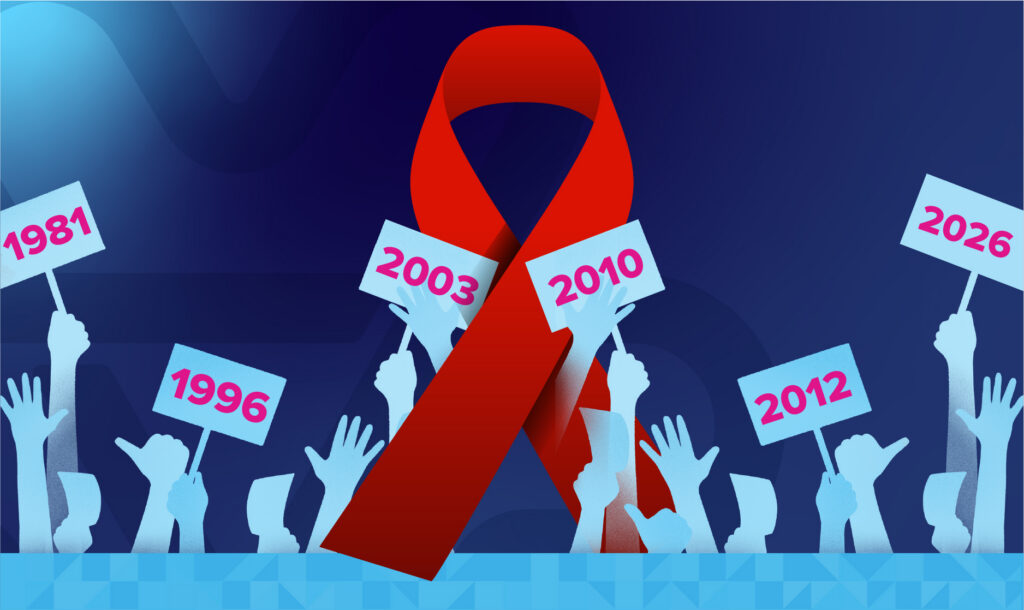
When the HIV/AIDS epidemic first entered the public’s collective consciousness in 1981, it was met with fear, moral panic, and blame, which quickly led to institutional discrimination.
However, both the stigma and the resulting advocacy efforts to abolish it were already in their gestational stages before HIV, says Avita Chief Advocacy Officer Glen Pietrandoni, who, as a pharmacist, cared for patients living with HIV and AIDS on the front lines for decades, and who, as a member of the LGBTQ+ community, banded together with others to advocate for medical rights and fight misinformation.
“Back in the 70s, we worried about herpes and other sexually transmitted diseases in silence, unaware that HIV was only a few years away,” Glen says. “Even then, stigma and shame surrounded these curable conditions. HIV amplified stigma through the fear of death.”
As the fight to end HIV ramped up, efforts by the civil rights, scientific, and public health communities joined forces to curb misinformation and discrimination and to innovate and educate the public about prevention and treatment methods that transformed a positive HIV diagnosis from a death sentence into a chronic, yet manageable condition.
Back in the 70s, we worried about herpes and other sexually transmitted diseases in silence, unaware that HIV was only a few years away. Even then, stigma and shame surrounded these curable conditions. HIV amplified stigma through the fear of death.
Glen Pietrandoni
Chief Advocacy Officer, Avita care Solutions
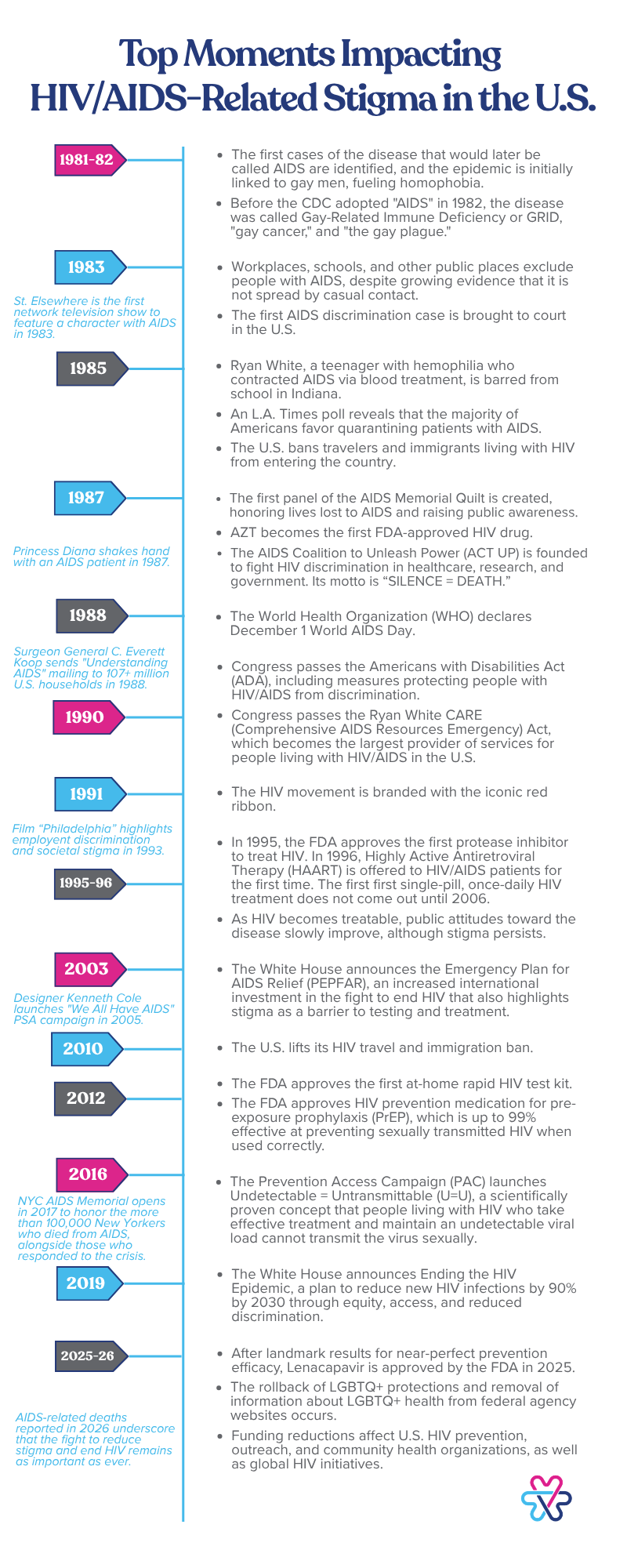
The timeline below highlights the key moments that have shaped HIV/AIDS stigma in the United States, viewed through advocacy, scientific, and cultural lenses. It documents the HIV/AIDS community’s heartbreaking losses and hard-won successes. Forty-five years after the epidemic began, there is much to celebrate. However, the HIV advocacy community is now facing a new flavor of human rights, healthcare, and structural stigma.
“Those of us active in HIV prevention and care know that, unfortunately, HIV stigma is alive and well despite decades of advocacy, education, scientific progress, and the extraordinary resilience of people living with HIV,” says Avita Chief Medical Officer Dr. Christopher Hall. “Since my start in 1987 as an HIV advocate and later as an HIV care physician in 2000, I have seen how far we have come — from fear and isolation toward superior treatment and effective prevention, along with enhanced dignity and hope — but I have also seen how stigma continues to shape whether people seek HIV testing, feel comfortable disclosing their status, remain in care, or feel fully seen. As a member of the LGBTQ+ community, I find this work deeply personal as well as professional, and I believe our next chapter must be defined not only by ending HIV transmission and the disease itself, but also by ending the shame, silence, and discrimination that remain in the way of true health equity.”
Glen couldn’t agree more. “It’s time to end stigma, amplify education, and normalize testing to ensure full access to prevention and treatment,” he says.
Since my start in 1987 as an HIV advocate and later as an HIV care physician in 2000, I have seen how far we have come — from fear and isolation toward superior treatment and effective prevention, along with enhanced dignity and hope — but I have also seen how stigma continues to shape whether people seek HIV testing, feel comfortable disclosing their status, remain in care, or feel fully seen.
Dr. Christopher Hall, AAHIVS
Chief Medical Officer, Avita Care Solutions
Sources
- A pictorial timeline of the HIV/AIDS pandemic. (n.d.). WebMD. https://www.webmd.com/hiv-aids/ss/slideshow-aids-retrospective
- amfAR, The Foundation for AIDS Research. (2026, June 5). Snapshots of an epidemic: An HIV/AIDS timeline – AMFAR, The Foundation for AIDS Research. amfAR, the Foundation for AIDS Research. https://www.amfar.org/about-hiv-aids/snapshots-of-an-epidemic-hiv-aids/
- Cisneros, L. (2021, June 4). 40 Years of AIDS: A Timeline of the Epidemic. University of California San Francisco. Retrieved July 20, 2026, from https://www.ucsf.edu/news/2021/06/420686/40-years-aids-timeline-epidemic
- Prevention Access Campaign. (n.d.). What is U=U? https://preventionaccess.org/about-introduction/
- Progress against HIV/AIDS timeline | National Institutes of Health. (n.d.). https://oar.nih.gov/about/progress-against-hivaids-timeline?utm_source=chatgpt.com
- Why the HIV epidemic is not over. (n.d.). https://www.who.int/news-room/spotlight/why-the-hiv-epidemic-is-not-over